
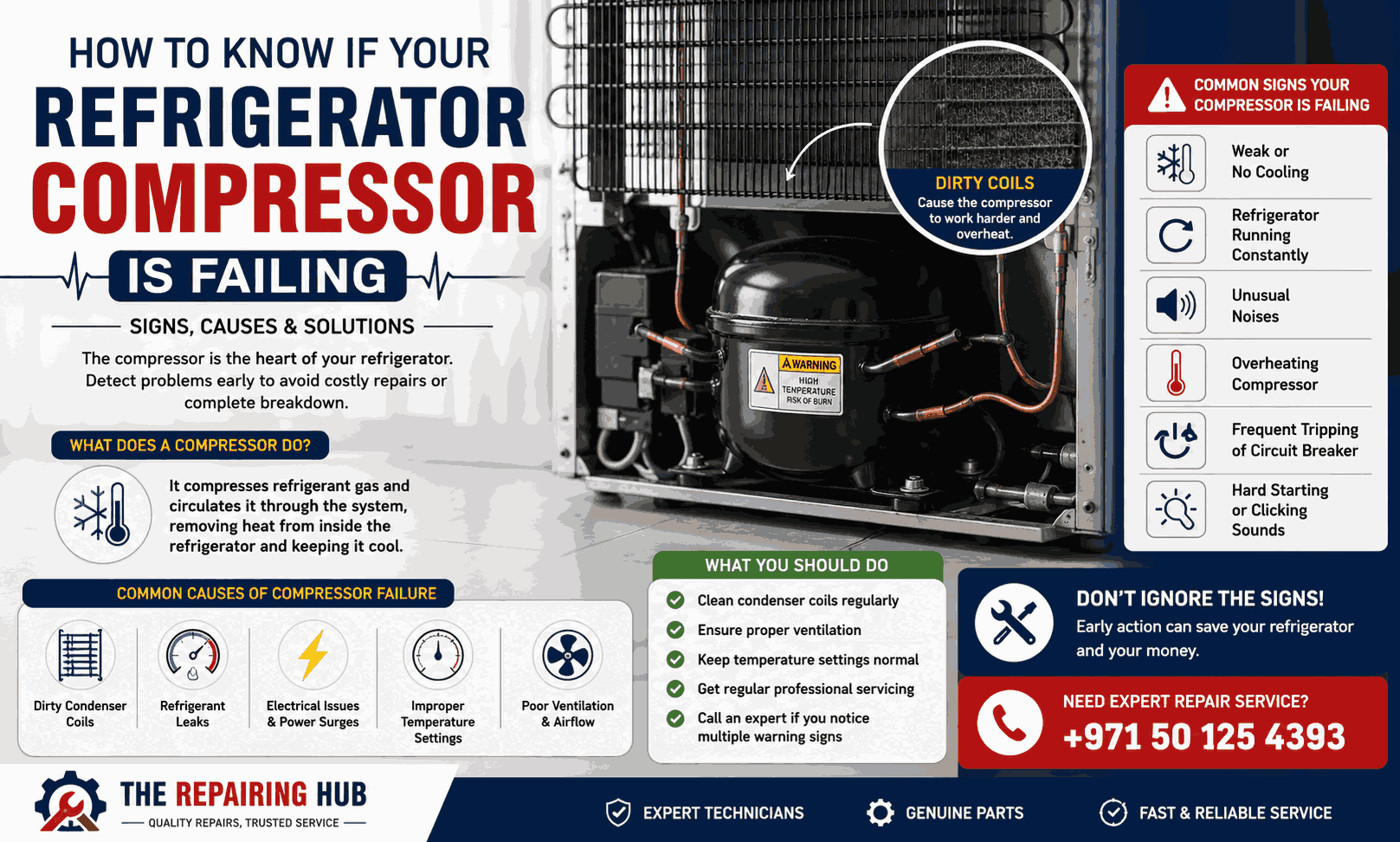
A refrigerator compressor is the heart of your cooling system, and when it starts to fail, your entire appliance struggles to function properly. Many homeowners search for signs of a bad refrigerator compressor when they notice cooling issues, but they are often unsure how to confirm the problem. Understanding early warning signs can save you from sudden breakdowns and expensive replacements. In this detailed guide, you will learn how to identify compressor failure, what causes it, and what actions you should take to fix the issue before it gets worse. What Does a Refrigerator Compressor Do The compressor plays a critical role in maintaining the cooling cycle. It compresses refrigerant gas and pushes it through the coils, allowing heat to be removed from inside the fridge. Without a properly functioning compressor, your refrigerator cannot maintain a stable temperature. This is why most refrigerator not cooling problems are directly or indirectly linked to compressor issues. Common Signs Your Refrigerator Compressor Is Failing Weak or No Cooling One of the first signs of compressor failure is reduced cooling performance. You may notice that your food is not staying fresh, or the fridge feels warmer than usual. This is a strong indication of fridge compressor problems, especially if the temperature continues to rise over time. Refrigerator Running Constantly If your refrigerator runs non-stop without cycling off, it could mean the compressor is struggling to maintain the desired temperature. This issue often appears in searches for why fridge runs continuously and is a key warning sign that should not be ignored. Unusual Noises A healthy compressor produces a soft humming sound. However, if you hear loud clicking, buzzing, or knocking noises, it may indicate internal damage. These sounds are commonly associated with refrigerator making loud noise issues linked to compressor failure. Overheating Compressor If you touch the back of your refrigerator and feel excessive heat, the compressor may be overheating. An overheating compressor is a serious issue and often leads to complete failure if not addressed quickly. Frequent Tripping of Circuit Breaker A failing compressor may draw more power than usual, causing your circuit breaker to trip frequently. This is often overlooked but is a clear sign of refrigerator electrical problems related to the compressor. Hard Starting or Clicking Sounds When a compressor struggles to start, you may hear repeated clicking sounds. This is usually caused by a faulty start relay or internal compressor damage. Many users searching for fridge not starting properly encounter this issue. What Causes Compressor Failure Understanding the causes can help you prevent future problems and extend the life of your appliance. Dirty condenser coils force the compressor to work harder, leading to overheating and wear. Lack of maintenance is one of the biggest contributors to compressor failure in refrigerators. Electrical issues, such as voltage fluctuations, can also damage the compressor. Overloading the refrigerator or setting extremely low temperatures can put additional stress on the system. Refrigerant leaks may cause the compressor to run continuously, eventually leading to burnout. How to Check If Your Compressor Is Faulty You can perform a few basic checks before calling a professional. Start by listening carefully to the sound of your refrigerator. If there is no humming sound at all, the compressor may not be running. Check the temperature inside the fridge and freezer. If both sections are warm, it is likely a compressor issue rather than a fan or airflow problem. You can also inspect the back of the refrigerator. If the compressor is extremely hot and shuts off frequently, it indicates a serious problem. However, diagnosing internal compressor damage requires technical expertise, so avoid opening sealed components. Can You Fix a Failing Compressor In most cases, a failing compressor cannot be repaired and needs to be replaced. However, some related components like the start relay or capacitor can be fixed easily. If the issue is caused by dirty coils or airflow restrictions, cleaning and maintenance may restore normal operation. For serious issues, professional refrigerator repair service is the safest option. Attempting DIY repairs on the compressor can be risky and may void warranties. Repair vs Replacement One of the biggest questions homeowners face is whether to repair or replace the refrigerator. If your appliance is relatively new, replacing the compressor may be a good option. However, if the fridge is old and repair costs are high, replacement might be more economical. This is a common concern in appliance repair decision making, and the right choice depends on the condition and age of your refrigerator. How to Prevent Compressor Failure Preventive maintenance is the best way to avoid costly repairs. Cleaning condenser coils regularly helps the compressor run efficiently. Ensure proper ventilation around the refrigerator and avoid placing it too close to walls. Keep the temperature settings within recommended limits. Regular servicing can help detect early signs of fridge cooling system problems before they become serious. When to Call a Professional If you notice multiple warning signs such as overheating, loud noises, and poor cooling, it is time to call an expert. Professional technicians can accurately diagnose the problem and recommend the best solution. Delaying repairs can lead to complete compressor failure and higher costs. Conclusion A failing compressor can seriously impact your refrigerator’s performance, but early detection can save you from major inconvenience. By recognizing the warning signs and taking timely action, you can prevent complete breakdown and extend the life of your appliance. If you are experiencing ongoing refrigerator compressor issues and need expert help, trust The Repairing Hub for reliable and professional service. Contact us today at +971501254393 and get your refrigerator running smoothly again. FAQs How do I know if my refrigerator compressor is bad? Common signs include poor cooling, unusual noises, overheating, and continuous running. Can a fridge work with a faulty compressor? No, the compressor is essential for cooling, and the fridge will not function properly without it. How long does a refrigerator compressor last? A compressor typically lasts 8 to 12 years, depending on usage
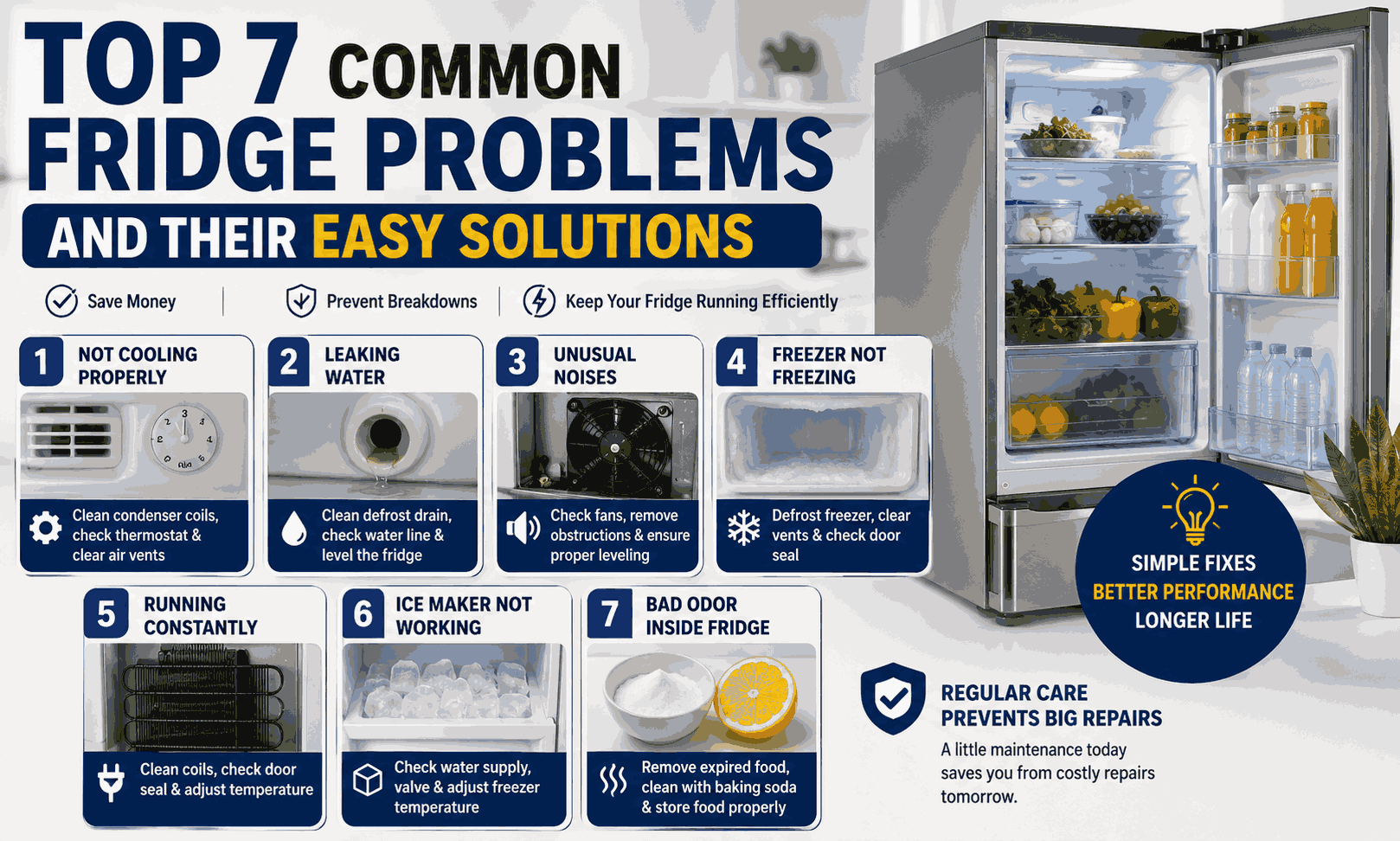
Top 7 Common Fridge Problems and Their Easy Solutions
A refrigerator is one of the most relied-on appliances in any home, and even a minor issue can disrupt your daily routine. From spoiled food to unexpected leaks, fridge problems can quickly become frustrating if not addressed on time. Many homeowners search for common fridge problems and solutions when they notice something unusual, but not every issue requires a technician. Understanding the most frequent refrigerator issues and knowing how to fix them can save both time and money. In this detailed guide, you will learn about the top problems people face with their refrigerators and simple, effective ways to solve them. Whether you are dealing with cooling issues or strange noises, this article will help you handle it like an expert. Why It Is Important to Fix Fridge Problems Early Ignoring small refrigerator issues often leads to bigger and more expensive repairs. A minor cooling issue today can turn into a complete breakdown tomorrow. That is why experts in appliance repair services always recommend early diagnosis and quick action. Timely maintenance not only extends the life of your appliance but also ensures energy efficiency. A well-functioning refrigerator consumes less electricity and keeps your food safe for longer periods. 1. Refrigerator Not Cooling Properly What Causes This Issue One of the most common complaints is a fridge not cooling properly. This problem can occur due to dirty condenser coils, a faulty thermostat, or blocked air vents. Sometimes, the compressor may also be responsible. Easy Solution Start by checking the thermostat settings and make sure they are correctly adjusted. Clean the condenser coils to remove dust and debris that may be affecting performance. Ensure that air vents inside the fridge are not blocked by food items. If the issue continues, it may require professional refrigerator repair service to inspect deeper components. 2. Refrigerator Leaking Water What Causes This Issue Water leakage is another frequent problem that many users face. It usually happens due to a clogged defrost drain or a blocked water line. Sometimes, improper leveling of the fridge can also cause water to accumulate. Easy Solution Clean the defrost drain using warm water to remove any blockage. Check the water supply line for leaks or cracks. Also, ensure that your refrigerator is placed on a flat surface to prevent water pooling. This simple fix often resolves most fridge leaking water issues. 3. Refrigerator Making Unusual Noises What Causes This Issue A refrigerator normally makes a low humming sound, but loud or unusual noises can indicate a problem. These sounds often come from the evaporator fan, condenser fan, or compressor. Easy Solution Check if the fridge is properly leveled, as uneven placement can cause vibrations. Inspect the fans for any obstruction or dirt buildup. Cleaning or replacing faulty components usually solves this issue. Many people search for refrigerator making noise causes when they hear strange sounds, and in most cases, the fix is straightforward. 4. Freezer Not Freezing Properly What Causes This Issue If your freezer is not freezing, it may be due to poor airflow, a faulty evaporator fan, or low refrigerant levels. Frost buildup can also block proper air circulation. Easy Solution Defrost the freezer completely to remove excess ice. Make sure the vents are clear and not obstructed. Check the door seal to ensure it is closing tightly. Addressing these factors can resolve most freezer not freezing problems without professional help. 5. Fridge Running Constantly What Causes This Issue A refrigerator that runs continuously can increase electricity bills and reduce the lifespan of the appliance. This usually happens due to dirty coils, frequent door opening, or a faulty thermostat. Easy Solution Clean the condenser coils and minimize how often you open the fridge door. Check the door seal to ensure it is airtight. Adjusting the temperature settings can also help. This issue is commonly linked to refrigerator energy efficiency problems. 6. Ice Maker Not Working What Causes This Issue If your fridge has an ice maker and it stops working, the problem could be due to a clogged water line, a faulty valve, or incorrect temperature settings. Easy Solution Check the water supply line and ensure it is not blocked or frozen. Adjust the freezer temperature to the recommended level. If needed, reset the ice maker. These steps can fix most ice maker not working issues quickly. 7. Bad Odor Inside Refrigerator What Causes This Issue Unpleasant smells inside the fridge are usually caused by spoiled food, spills, or poor cleaning habits. Bacteria buildup can also contribute to the odor. Easy Solution Remove expired food items and clean the interior with a mixture of baking soda and water. Keep food stored in airtight containers to prevent odor spread. Regular cleaning is essential to avoid fridge smell problems and maintain hygiene. Preventive Tips to Avoid Fridge Problems Taking care of your refrigerator can prevent most of these issues from occurring. Regular cleaning, proper organization, and routine inspections play a key role in maintaining performance. Avoid overloading the fridge, as it can block airflow and reduce cooling efficiency. Always ensure that the door is closed properly to maintain internal temperature. Following these simple habits can save you from frequent home appliance repair needs. When You Should Call a Professional While many fridge problems have easy solutions, some situations require expert attention. If your refrigerator still does not work properly after basic troubleshooting, it is best to consult a professional. Issues like compressor failure, refrigerant leaks, or electrical faults should only be handled by trained technicians. Attempting to fix these problems yourself can lead to further damage. Conclusion Refrigerator problems are common, but most of them can be fixed بسهولة with the right knowledge and quick action. From cooling issues to water leaks, understanding the cause is the first step toward solving the problem. Regular maintenance and timely repairs can keep your appliance running smoothly for years. If you are facing persistent issues and need expert assistance, trust The Repairing Hub for reliable and professional service. Call now at +971501254393 and
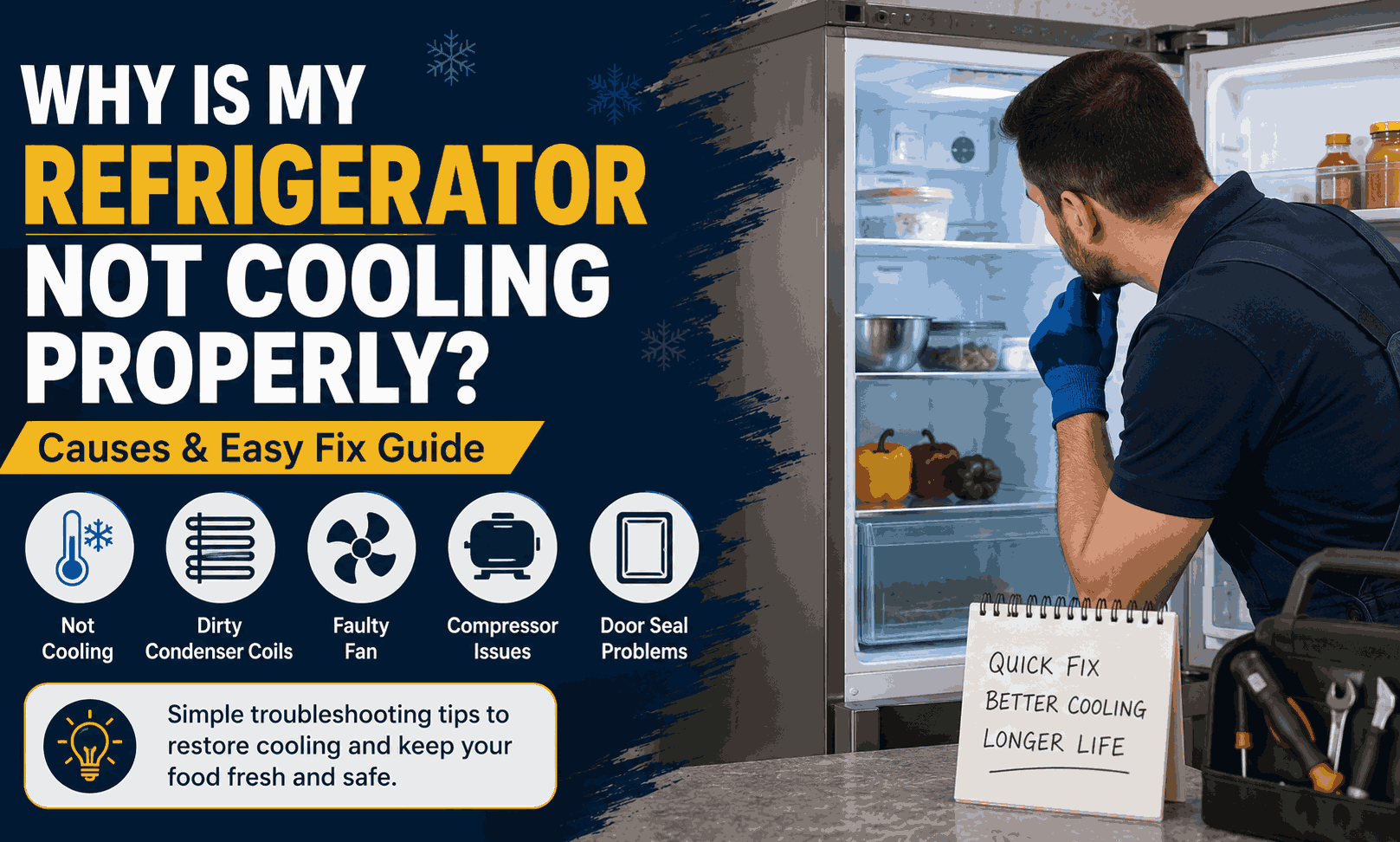
Why Is My Refrigerator Not Cooling Properly and How to Fix It
A refrigerator is one of the most essential appliances in any home, and when it stops cooling properly, it can quickly turn into a stressful situation. Food starts spoiling, unpleasant odors develop, and your daily routine gets disrupted. Many homeowners immediately think about replacing their appliance, but in reality, most cooling issues can be resolved with the right approach and a basic understanding of how the system works. If you have been searching for answers to refrigerator not cooling, you are not alone. This is one of the most common appliance problems faced by households worldwide. The good news is that not every issue requires professional intervention, and in many cases, simple troubleshooting can restore your fridge to normal operation. This detailed guide will walk you through the real reasons why your refrigerator may not be cooling properly and how to fix those issues effectively. By the end, you will have a clear understanding of whether the problem is something you can handle yourself or if it requires expert attention. Understanding How a Refrigerator Works Before diving into the causes, it is important to understand the basic working mechanism of a refrigerator. The appliance relies on a closed-loop system that circulates refrigerant through coils. This process removes heat from inside the fridge and releases it outside, keeping your food cold and fresh. The compressor plays a vital role in this process by compressing the refrigerant and pushing it through the system. The evaporator coils absorb heat from inside the fridge, while the condenser coils release that heat outside. Fans help circulate air across these coils to maintain a consistent temperature. When any part of this system fails or gets obstructed, you may start experiencing fridge cooling problems. Understanding these components will help you identify the root cause more accurately. Common Reasons Why Your Refrigerator Is Not Cooling Dirty Condenser Coils One of the most overlooked causes of poor cooling is dirty condenser coils. These coils are usually located at the back or underneath the refrigerator. Over time, dust, dirt, and debris accumulate on them, reducing their ability to release heat. When the coils cannot dissipate heat efficiently, the refrigerator struggles to maintain a low internal temperature. This often leads to the common complaint of refrigerator not cold enough. Cleaning the condenser coils regularly can significantly improve performance. Simply unplug the fridge and use a soft brush or vacuum cleaner to remove dirt buildup. Faulty Evaporator Fan The evaporator fan is responsible for circulating cold air inside the refrigerator. If this fan stops working, the cold air will not reach all compartments evenly. You may notice that the freezer is still cold, but the refrigerator section is warm. This is a strong indication of a faulty evaporator fan, which is a common issue in fridge repair cases. Replacing the fan motor usually resolves the problem, but it is recommended to get it checked if you are unsure. Malfunctioning Thermostat The thermostat controls the temperature inside your refrigerator. If it is not working properly, the compressor may not turn on when needed. This can result in inconsistent cooling or complete failure to cool. Sometimes, simply adjusting the thermostat settings can solve the issue. However, if the problem persists, the thermostat may need replacement. Issues related to refrigerator temperature control are often linked to this component. Blocked Air Vents Air vents inside the refrigerator allow cold air to circulate between compartments. If these vents are blocked by food items, airflow gets restricted. This leads to uneven cooling and may cause certain areas to become warmer than others. Many users overlook this simple issue while searching for solutions to why fridge is not cooling properly. Make sure to organize your fridge properly and avoid overloading it. Compressor Problems The compressor is the heart of the refrigerator. If it fails, the entire cooling process stops. A faulty compressor may produce unusual noises or stop working altogether. This is a more serious issue and often requires professional appliance repair service. In many cases, repairing or replacing the compressor can be costly, so proper diagnosis is essential. Refrigerant Leakage Refrigerant is the substance responsible for absorbing and releasing heat. If there is a leak in the system, the refrigerator will not cool effectively. Signs of a refrigerant leak include reduced cooling performance and longer running times. Handling refrigerant requires specialized tools and expertise, so this is not a DIY fix. This issue is commonly associated with advanced fridge cooling issues. Faulty Start Relay The start relay helps the compressor start and run efficiently. If it is defective, the compressor may fail to operate. This can result in the refrigerator not cooling at all. Replacing a faulty start relay is relatively inexpensive and can restore normal functionality. Door Seal Problems The door gasket ensures that cold air stays inside the refrigerator. If the seal is damaged or loose, warm air can enter, making it harder for the appliance to maintain temperature. This leads to increased energy consumption and poor cooling performance. Checking and replacing worn-out seals can solve many refrigerator cooling problems. Overloaded Refrigerator Overloading your refrigerator with too many items can restrict airflow and reduce cooling efficiency. Proper spacing between items allows air to circulate freely. This simple adjustment can often fix minor fridge not cooling properly issues without any technical intervention. How to Fix a Refrigerator That Is Not Cooling Fixing a refrigerator depends on identifying the exact cause of the problem. Start with basic troubleshooting steps before moving to complex solutions. Begin by checking the power supply and ensuring the appliance is plugged in properly. Then inspect the thermostat settings and adjust them if needed. Cleaning the condenser coils should be your next step, as it is one of the most common solutions. If the problem persists, listen for unusual noises coming from the compressor or fans. This can help you pinpoint mechanical issues. Always ensure proper airflow by organizing items inside the fridge and keeping vents unblocked. For more complex problems like refrigerant