A refrigerator is one of the most essential appliances in any home, and when it stops cooling properly, it can quickly turn into a stressful situation.
Food starts spoiling, unpleasant odors develop, and your daily routine gets disrupted.
Many homeowners immediately think about replacing their appliance, but in reality, most cooling issues can be resolved with the right approach and a basic understanding of how the system works.
If you have been searching for answers to refrigerator not cooling, you are not alone. This is one of the most common appliance problems faced by households worldwide.
The good news is that not every issue requires professional intervention, and in many cases, simple troubleshooting can restore your fridge to normal operation.
This detailed guide will walk you through the real reasons why your refrigerator may not be cooling properly and how to fix those issues effectively.
By the end, you will have a clear understanding of whether the problem is something you can handle yourself or if it requires expert attention.
Understanding How a Refrigerator Works
Before diving into the causes, it is important to understand the basic working mechanism of a refrigerator. The appliance relies on a closed-loop system that circulates refrigerant through coils. This process removes heat from inside the fridge and releases it outside, keeping your food cold and fresh.
The compressor plays a vital role in this process by compressing the refrigerant and pushing it through the system. The evaporator coils absorb heat from inside the fridge, while the condenser coils release that heat outside. Fans help circulate air across these coils to maintain a consistent temperature.
When any part of this system fails or gets obstructed, you may start experiencing fridge cooling problems. Understanding these components will help you identify the root cause more accurately.
Common Reasons Why Your Refrigerator Is Not Cooling
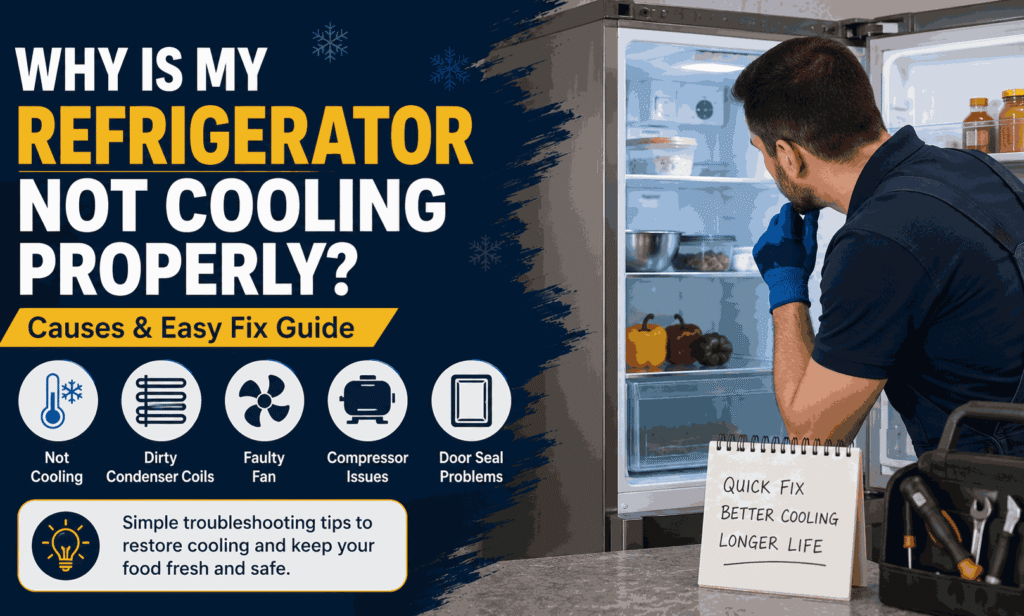
Dirty Condenser Coils
One of the most overlooked causes of poor cooling is dirty condenser coils. These coils are usually located at the back or underneath the refrigerator. Over time, dust, dirt, and debris accumulate on them, reducing their ability to release heat.
When the coils cannot dissipate heat efficiently, the refrigerator struggles to maintain a low internal temperature. This often leads to the common complaint of refrigerator not cold enough.
Cleaning the condenser coils regularly can significantly improve performance. Simply unplug the fridge and use a soft brush or vacuum cleaner to remove dirt buildup.
Faulty Evaporator Fan
The evaporator fan is responsible for circulating cold air inside the refrigerator. If this fan stops working, the cold air will not reach all compartments evenly.
You may notice that the freezer is still cold, but the refrigerator section is warm. This is a strong indication of a faulty evaporator fan, which is a common issue in fridge repair cases.
Replacing the fan motor usually resolves the problem, but it is recommended to get it checked if you are unsure.
Malfunctioning Thermostat
The thermostat controls the temperature inside your refrigerator. If it is not working properly, the compressor may not turn on when needed.
This can result in inconsistent cooling or complete failure to cool. Sometimes, simply adjusting the thermostat settings can solve the issue. However, if the problem persists, the thermostat may need replacement.
Issues related to refrigerator temperature control are often linked to this component.
Blocked Air Vents
Air vents inside the refrigerator allow cold air to circulate between compartments. If these vents are blocked by food items, airflow gets restricted.
This leads to uneven cooling and may cause certain areas to become warmer than others. Many users overlook this simple issue while searching for solutions to why fridge is not cooling properly.
Make sure to organize your fridge properly and avoid overloading it.
Compressor Problems
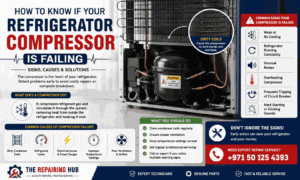
The compressor is the heart of the refrigerator. If it fails, the entire cooling process stops.
A faulty compressor may produce unusual noises or stop working altogether. This is a more serious issue and often requires professional appliance repair service.
In many cases, repairing or replacing the compressor can be costly, so proper diagnosis is essential.
Refrigerant Leakage
Refrigerant is the substance responsible for absorbing and releasing heat. If there is a leak in the system, the refrigerator will not cool effectively.
Signs of a refrigerant leak include reduced cooling performance and longer running times. Handling refrigerant requires specialized tools and expertise, so this is not a DIY fix.
This issue is commonly associated with advanced fridge cooling issues.
Faulty Start Relay
The start relay helps the compressor start and run efficiently. If it is defective, the compressor may fail to operate.
This can result in the refrigerator not cooling at all. Replacing a faulty start relay is relatively inexpensive and can restore normal functionality.
Door Seal Problems
The door gasket ensures that cold air stays inside the refrigerator. If the seal is damaged or loose, warm air can enter, making it harder for the appliance to maintain temperature.
This leads to increased energy consumption and poor cooling performance. Checking and replacing worn-out seals can solve many refrigerator cooling problems.
Overloaded Refrigerator
Overloading your refrigerator with too many items can restrict airflow and reduce cooling efficiency.
Proper spacing between items allows air to circulate freely. This simple adjustment can often fix minor fridge not cooling properly issues without any technical intervention.
How to Fix a Refrigerator That Is Not Cooling
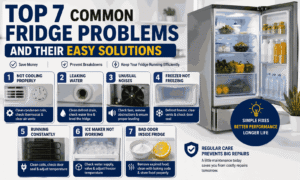
Fixing a refrigerator depends on identifying the exact cause of the problem. Start with basic troubleshooting steps before moving to complex solutions.
Begin by checking the power supply and ensuring the appliance is plugged in properly. Then inspect the thermostat settings and adjust them if needed. Cleaning the condenser coils should be your next step, as it is one of the most common solutions.
If the problem persists, listen for unusual noises coming from the compressor or fans. This can help you pinpoint mechanical issues. Always ensure proper airflow by organizing items inside the fridge and keeping vents unblocked.
For more complex problems like refrigerant leaks or compressor failure, it is best to seek professional assistance. Attempting such repairs without proper knowledge can cause further damage.
Preventive Maintenance Tips
Regular maintenance can prevent most cooling issues and extend the life of your refrigerator. Keeping the appliance clean and well-organized plays a crucial role in maintaining efficiency.
Avoid placing hot food directly inside the fridge, as it increases the internal temperature. Make sure the door is always closed properly to prevent air leakage.
Scheduling periodic inspections can help identify potential problems early. This approach is often recommended by experts dealing with home appliance repair.
When to Call a Professional
While many issues can be fixed at home, some problems require expert attention. If your refrigerator is still not cooling after basic troubleshooting, it is time to call a professional.
Signs that you need expert help include unusual noises, frequent cycling, and complete loss of cooling. These issues often indicate deeper mechanical or electrical problems.
Professional technicians have the tools and expertise to diagnose and fix these issues efficiently.
Conclusion
A refrigerator that is not cooling properly can be frustrating, but understanding the root cause makes it much easier to fix. From dirty coils to compressor failure, each issue has a specific solution that can restore your appliance’s performance.
Regular maintenance and timely repairs are key to avoiding major breakdowns. If you are dealing with persistent refrigerator repair problems, it is always wise to seek expert assistance.
At The Repairing Hub, we specialize in diagnosing and fixing all types of refrigerator issues with precision and care. If your appliance is giving you trouble, do not wait until the problem gets worse. Contact our expert team today at +971501254393 and get your refrigerator back to perfect working condition.
FAQs
Why is my refrigerator running but not cooling?
This usually happens due to dirty condenser coils, a faulty evaporator fan, or low refrigerant levels. Checking these components can help identify the issue.
How long should a refrigerator take to cool?
A refrigerator typically takes 4 to 6 hours to reach the desired temperature after being turned on.
Can a dirty fridge cause cooling problems?
Yes, dirt buildup on condenser coils can reduce efficiency and lead to cooling issues.
Is it worth repairing a refrigerator?
In most cases, repairing is more cost-effective than replacing, especially if the appliance is relatively new.
How often should I clean my refrigerator coils?
It is recommended to clean the coils every 6 months to maintain optimal performance.
What temperature should my refrigerator be set at?
The ideal temperature is between 3°C to 5°C for proper cooling and food safety.